
Gnostic Thought and Myth Pt. 4: The Fall of Sophia
The Fall of Man occurred before Adam and Eve. Let's talk about it.

Christianity insults your intelligence by deeming the erroneous pair, Adam and Eve, as the source of all pain and suffering on Earth. Due to Eve’s beguiling and seductive nature, she convinced Adam to be disobedient, thereby initiating the Fall of Man. Absolute stupidity.
This view has no basis in common sense, nor does it include the cosmic scheme of things. It deems the creator of this physical realm as perfect, making his creations a bunch of “can’t get right”s who deserve to learn their lesson.
Fortunately, the Gnostics told this story better through the Divine feminine being known as Sophia.
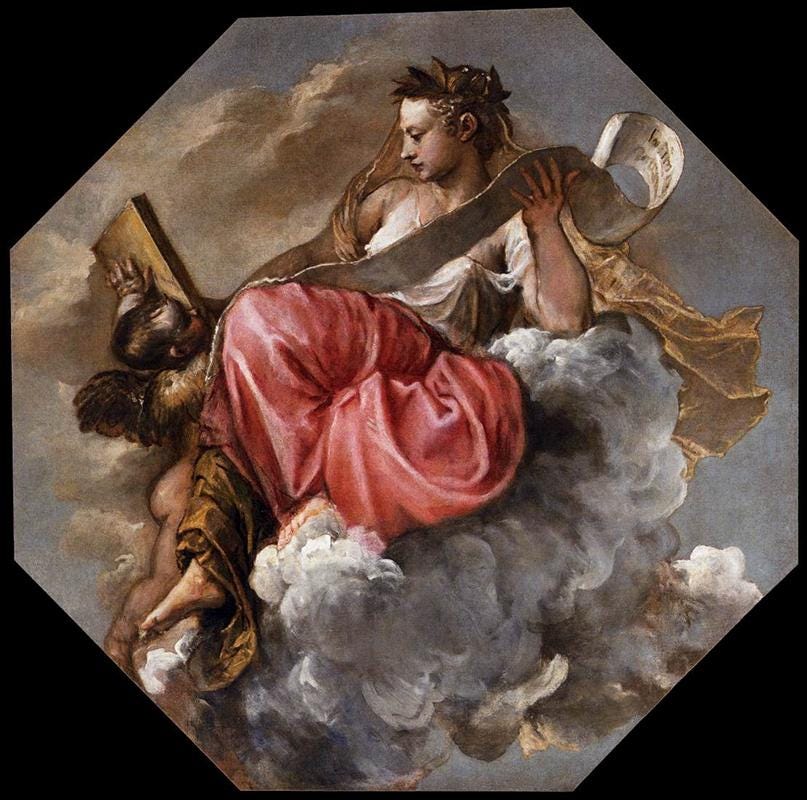
Sophia resides in the lofty heights of the Pleroma, Greek for ‘Fullness”. This involves the precreation of material existence, including that of planet Earth. The Pleroma is the Gnostic Heaven.
She is the youngest of the aeons, the Divine beings descended from God. Being the youngest, she was also the farthest removed from God, being the source and center of the original Light.
We have discussed in our African Cosmology series the 4 main creation accounts of ancient Kemet [travel here]. The “Big Bang” involved the pairs of the masculine and feminine, being the co-creators of material existence bringing order to the chaos. This is also shown in Gnosticism, the creative essence in each aeon, giving them the ability to procreate.
However, the story gets interesting when Sophia, being the farthest away from the light has a sense of longing. Her longing to have a child was not coupled with the masculine. Various versions of the myths “fork” at this road of the story but essentially this leads to her going farther away from the Light.
She sees a light in the distance, that she thought might be the Father from whence she came. However, this was only him reflected in the Abyss, the Cosmic Dark. This light, she seeks in perpetuity until she reaches a power known as the Limit (Horos). Here is where we see the split of Sophia.
Sophia’s Separation from the Divine
Sophia’s higher self, that which we all have, stays connected with the Aeons in the Pleroma, in Heaven. Her lower half descends beyond the Limit, remaining in alienation from the Creator. This is likened to our own human condition. One half of us knows there is more to life, more to reality, more than Earth. Hence, why the old folks say “I’m just passing through” or referring to Heaven as the “Upper Room” signifying our inherent connection, us just being downstairs on Earth for a while. Like Sophia, our higher self knows our purpose in its fullness, while our lower self is steeped in ignorance longing for knowledge and wisdom.
Sophia’s alienation, like our own, results in confusion leading to frustration. Two worlds existing simultaneously yet veiled behind the illusion of separation. Her anger actually produces the material universe, the four basic elements of Earth, Fire, Water, and Air. However, this is where her longing for a child also occurs.
Her son, the Demiurge, is produced without a masculine counterpart. He is the “‘Artificer’ of the created world." This is likened to how some would believe that we create our own heaven and hell. That creative essence being directed symbolizes the “On High” from whence we originate. Heaven or hell comes forth based on our knowledge of our lower self, or rather the connection between the higher and the lower.
Sophia’s misbegotten offspring proceeds to design his own kingdom, which is composed of seven spheres (planets), presided over by seven rulers (archontes) of time, who are the rulers of destiny and the jailers of spirits.
- Hoeller, p. 40-41
Once Sophia sees her son is out-of-sorts, and unlike all the other heavenly beings, she casts him out. His “out of wedlock” existence explains a lot about why the world is the way it is. This incomplete “beginning” is the source of evil. But really, evil is not involved. In the sense of good and evil, good is knowledge and ignorance is evil.
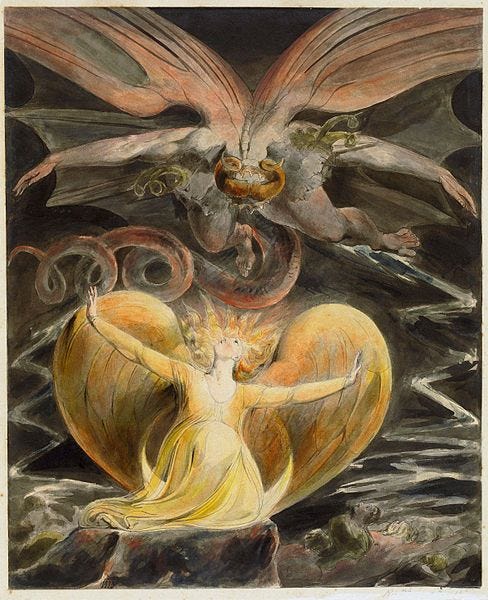
Ignorance is the Veil
Ignorance is equated to blindness, the veil over one’s eyes preventing them from being aware of reality. The Demiurge’s ignorance extends beyond his mother, the inability to acknowledge her existence and anything above him. This explains his haughty nature in the Old Testament, proclaiming his “jealousy” and portraying over-the-top displays of wrath. His creation of the World, was made “out of his ignorance, foolishness, and malevolence, trapping sparks of divinity within Adam and Eve along the way” (McCoy). Even to the point of saying:
5 I am the Lord, and there is none else, there is no God beside me: I girded thee, though thou hast not known me:
- Isaiah 45:5, KJV
Your lower self, the one trapped in humanity, or rather being human is connected to the ego. The ego seeks what is comfortable, that which requires no expansion. Therefore, it does not seek anything that sounds or feels like “danger”. It just wants to sit. Meanwhile, there are infinite other realities, existing beyond the physical, connected to the collective unconscious, the akashic records, your imagination, all spiritual realities that precede and reside higher than the physical. This is why ignorance is sustained by not wanting to know, The want to know, the desire to understand all aspects of yourself on a deeper level, even to the point of challenging yourself to study even more, is that which brings you home. That is your salvation. Independence is gained by depending on yourself.
Due to Sophia’s imperfect nature represented by her son, the Demiurge, she is below the Pleroma but just above her son. However, that is not where the story ends.
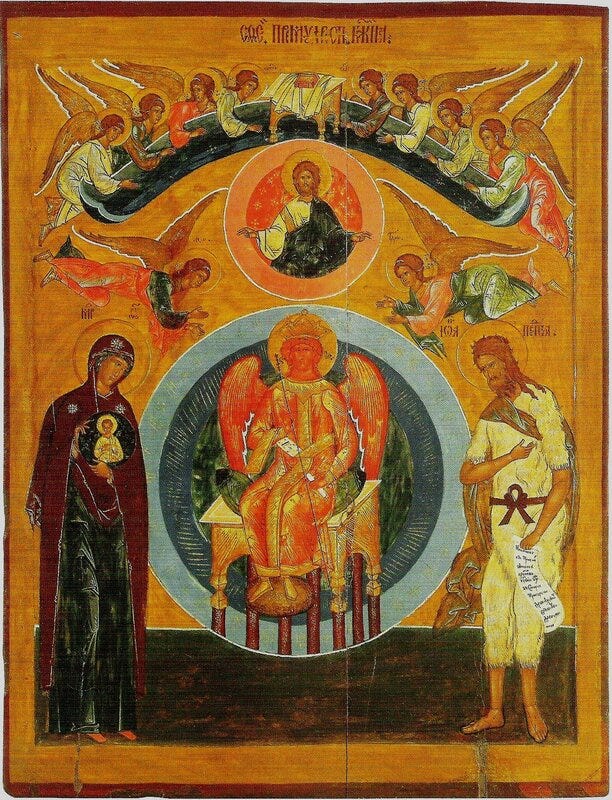
The Divine Beings, also known as the Aeons, petition to God the Father (Light, Source, the Absolute, etc.) to bring her back. Essentially, the Fullness is not Full without Sophia, no matter what she did. A beautiful story, is this not? The soul, in the physical body longs to be back home in the Fullness. This is coupled with the Divine Beings, the higher spiritual realities, your soul family, wanting the soul back. This all comes from gnosis, the direct experiential knowledge of the Divine. This is the connection to your higher self, which knows every single step needed to return home.
Sophia resides in all humans as the Divine Spark, yes. However, Jesus is the bridegroom sent to Earth, to remind them of their heavenly origin. Not through Jesus are they redeemed, but of their knowledge of the original story. Jesus, was only a physical manifestation of the Aeon, Christos.
In the mythology, she eventually ascends back into the Pleroma, traversing the 12 gates through using the 12 repentances. These were the original 12 levels she “transgressed” due to her original yearn to know the Light. Notice that she just wanted to see the light, but it was just the reflection. This was innocent, not a shaming of the Divine Feminine because of a “mistake”. Note this, for Christianity differentiates itself from this in the first 3 chapters deeming the women the source of all suffering and pain:
After her restoration she announces to her companions the twofold truth that, while every attempt to overstep the divinely ordained limits, has for its consequence suffering and punishment, so, on the other hand, the divine compassion is ever ready to vouchsafe pardon to the penitent.
Simply put, the Fall is the ultimate sin, yes. To be trapped in the human body is the worst state, for it traps the spirit in the far country, away from home. However, the presence of the Divine Spark within, coupled with the higher self, shows that no matter what one does down here, the call for home is everlasting. Immediately, this contrasts with Orthodox Christianity, literalized myth, because Christianity deals with morals. Morals, agreed upon by a majority, eventually turn into laws. Laws represent control, but most importantly they need to be enforced. Hence, why Christianity and its doctrine recommends its believers to be contender of the faith while the entire religion is forced down the throats of the innocents, under the threat of death.
The Divine Sophia, the Divine Feminine is that which longs for home. All parts of her, Divine Sparks, are apart of the Pleroma, the Fullness, Heaven. Knowing yourself, depending on yourself, and trusting yourself is all a part of returning home. Heeding your intuition, the voice of your higher self is heeding the call of the Divine, your return to your Heaven.
📅 In the coming weeks…
We will continue to explore the key players of Gnosticism. The elephant in the room was Adam and Eve, the classic myth behind the creation account of Christianity. I just had to get that out the way because, personally, I never agreed with how it portrayed women from the get-go. Today, we have delved into the Divine Feminine, Sophia, who through her yearning to know the Divine, seeded into man the Divine Spark herself. Cosmically, this is the direct connection one has to the Divine, deeming priests, bishops, pastors, church houses, Catholicism, and religion as a whole absolutely unnecessary.
Sophia was not alone in her struggle. To understand the Gnostic myth in full, we have to meet its cast: The Demiurge, and the Archons, and the Aeons.
Stay tuned and I will see you next Thursday!